

Executive Summary
In software development and project management, gathering requirements across multiple departments often leads to conflicting priorities, unrecorded assumptions, and critical scope gaps. Manual cross-examination of long meeting transcripts or raw text notes is time-consuming and prone to human error.
This case study demonstrates how Visual Paradigm NotesKeep combined with the Visual Paradigm AI Chatbot enables project managers and business analysts to centralize multi-format meeting documentation, perform automated stakeholder conflict analysis, and uncover missing scope items before development begins.
The Challenge: Navigating Multi-Stakeholder Contradictions
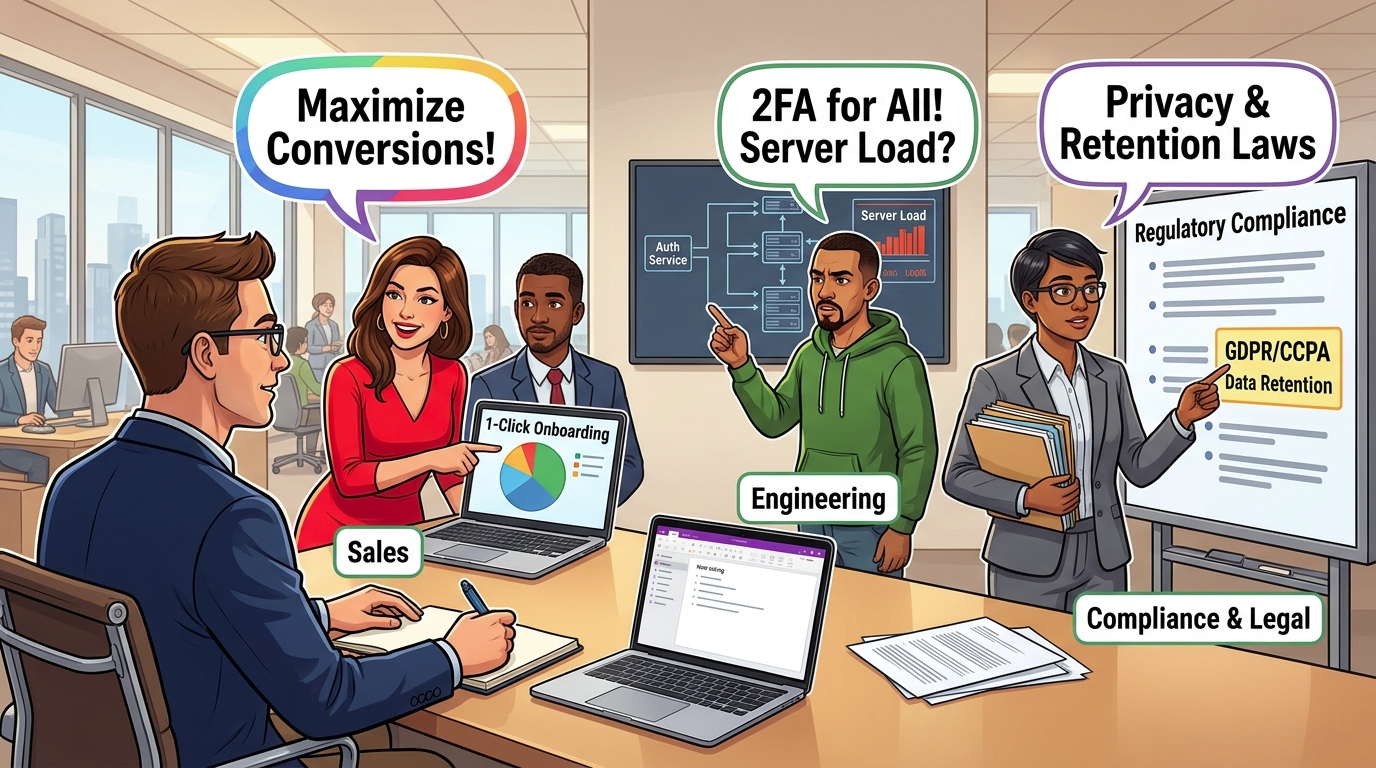
John, a Lead Business Analyst, was tasked with defining the functional requirements for a major platform initiative. To gather complete insight, he conducted separate discovery sessions with three distinct stakeholders:
- Sales Leadership: Focused on user acquisition, frictionless onboarding, and unrestricted data visibility.
- Lead Systems Architect: Focused on system stability, API rate limits, infrastructure costs, and strict security protocol.
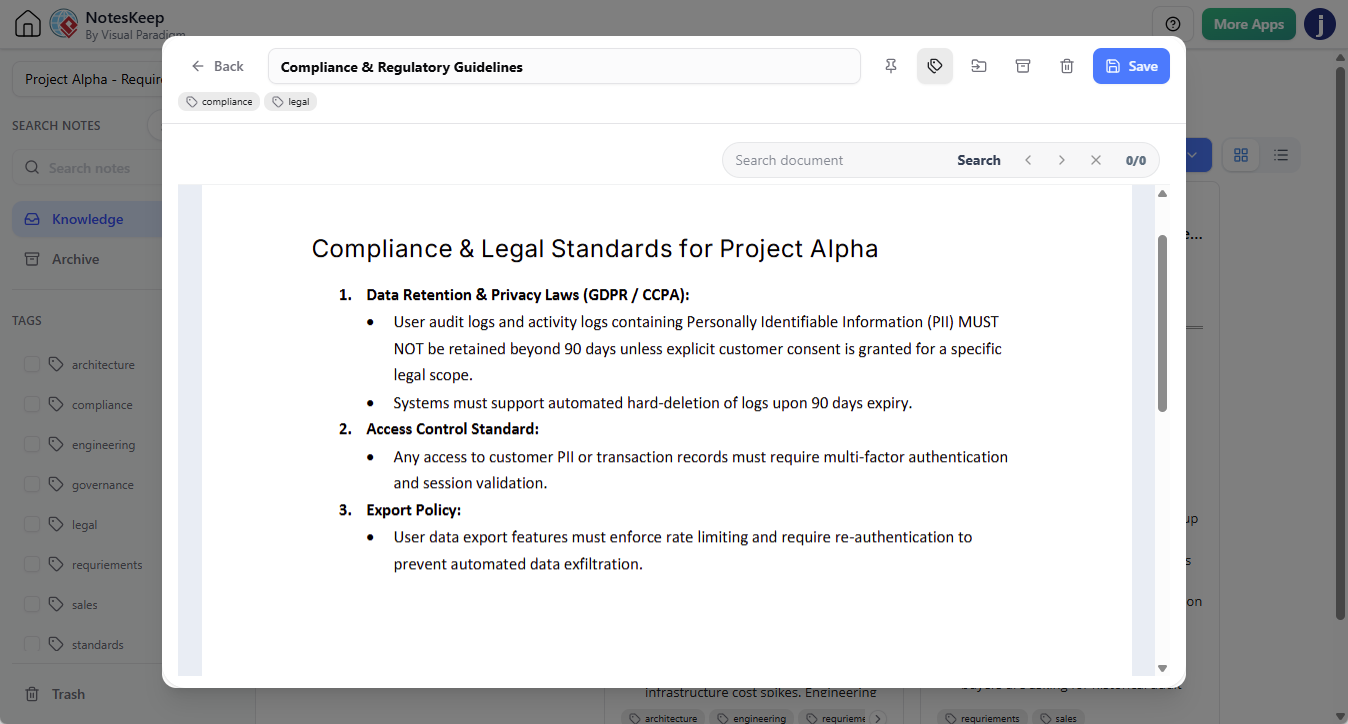
- Compliance & Legal Officer: Focused on regulatory privacy standards (GDPR/CCPA), strict multi-factor authentication, and data retention windows.
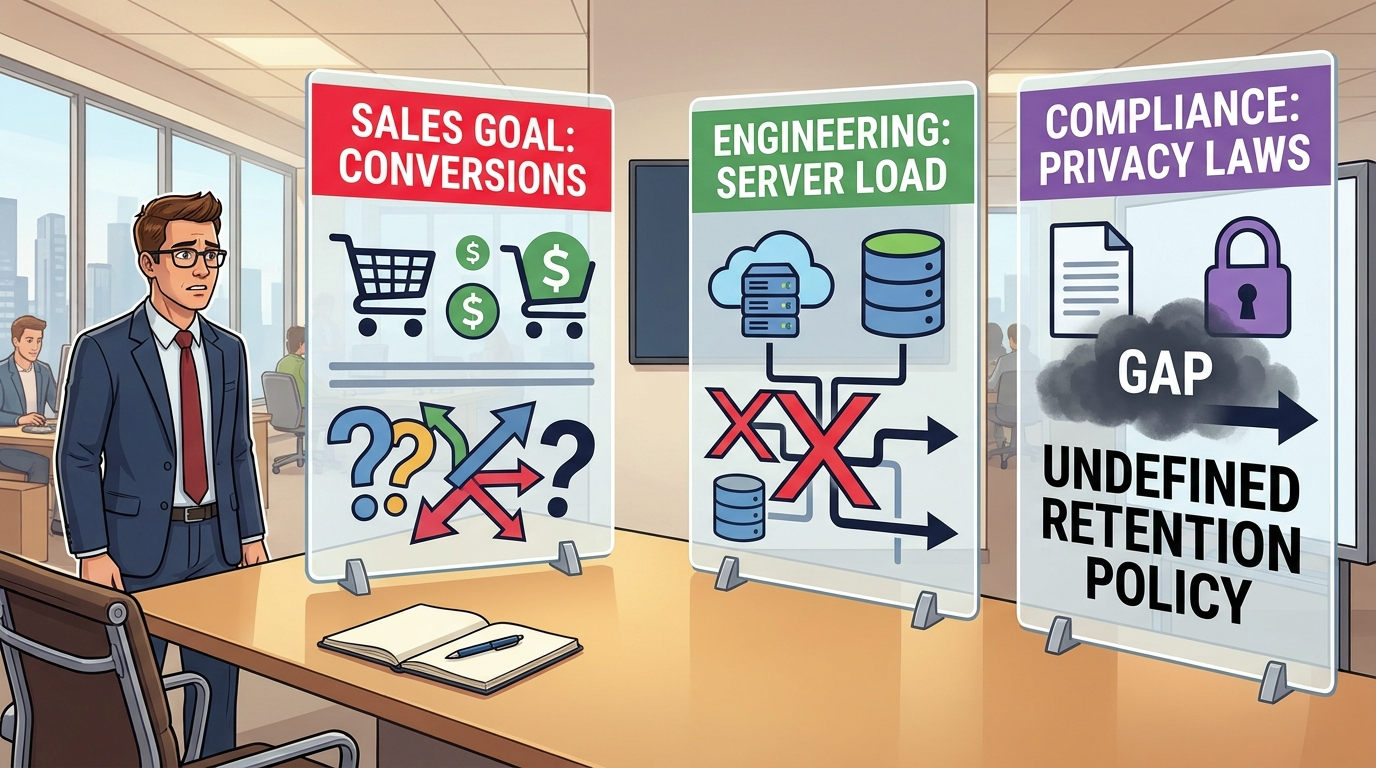
With hours of notes and documentation collected across isolated meetings, John faced the challenge of synthesizing the data to ensure no requirements contradicted each other and no critical technical domains were overlooked.
Phase 1: Centralized Knowledge Capture in NotesKeep
John created a dedicated project space within NotesKeep named Project Alpha - Requirements Discovery. He then organized all meeting inputs into a single source of truth:
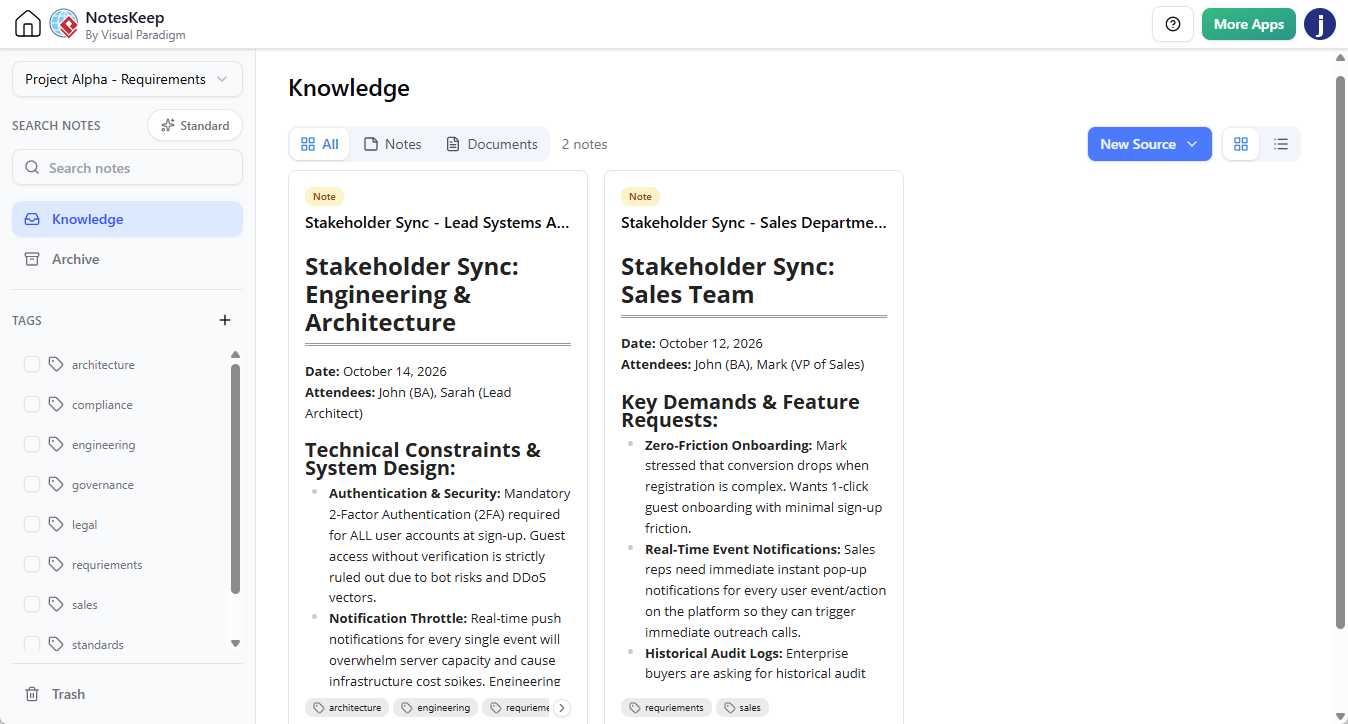
- WYSIWYG Note Editor: John logged raw meeting notes from his conversations with Sales and Engineering using rich-text formatting, applying custom tags such as
#requirements,#sales, and#architecture.
- Multi-Format Document Import: He uploaded the compliance department’s PDF guidelines directly into the same project space.
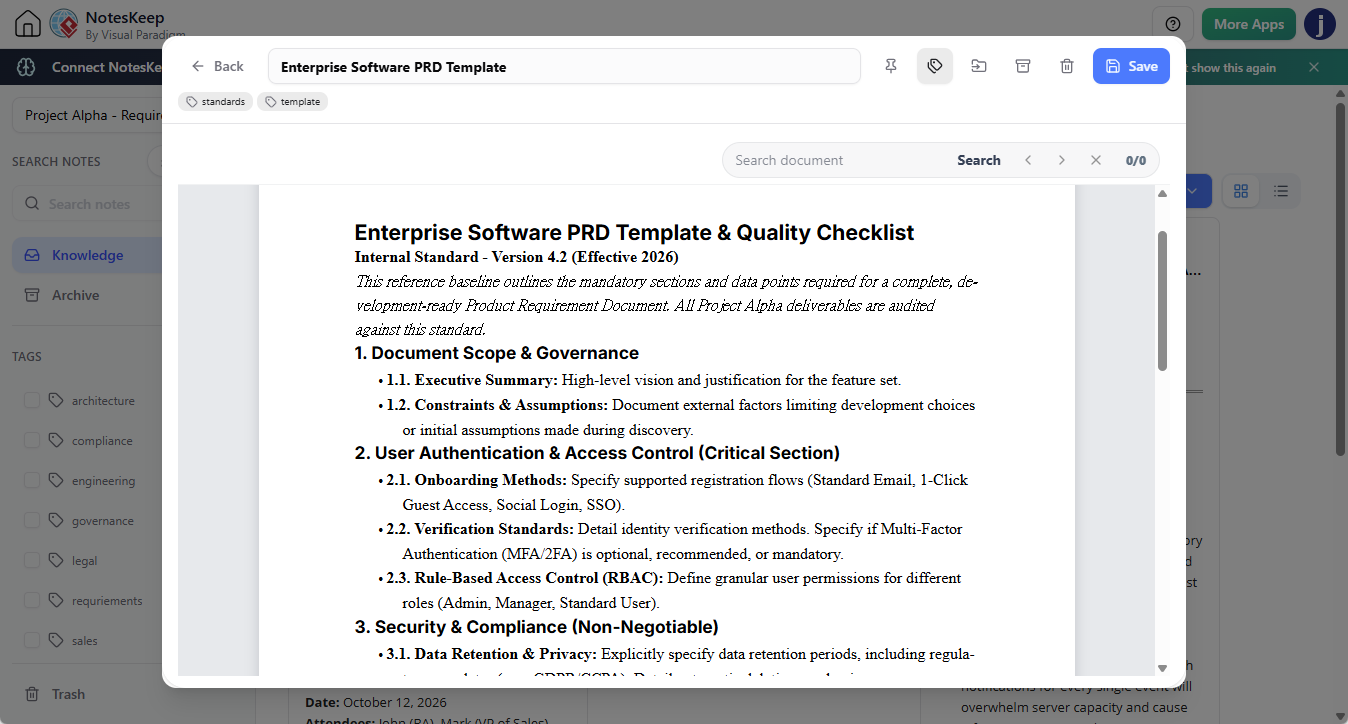
- Scope Baseline Reference: He added a standard Product Requirement Document (PRD) evaluation checklist to establish baseline scope expectations.
Phase 2: Automated Analysis via Visual Paradigm AI Chatbot
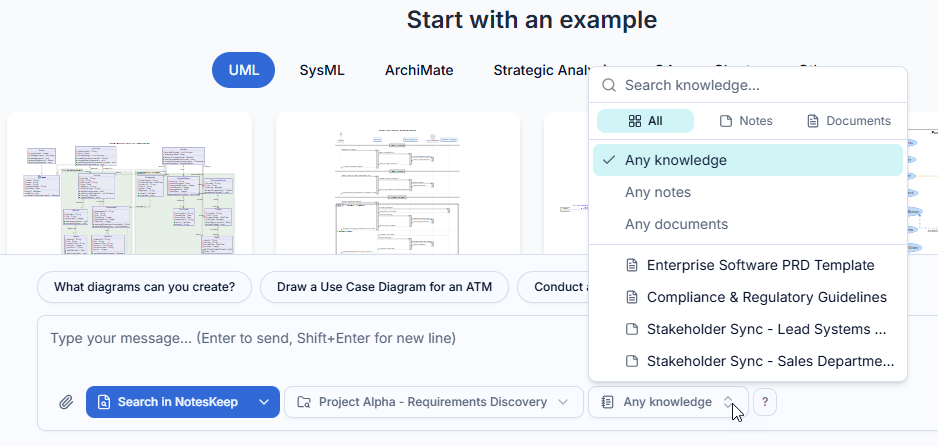
With all relevant documentation stored in NotesKeep, John launched the Visual Paradigm Chatbot, toggled the “Search in NotesKeep” scope filter, and selected Project Alpha - Requirements Discovery.
1. Detecting Stakeholder Conflicts
John submitted the following prompt to analyze department alignment:
“Analyze all stakeholder meeting notes in this project. Identify any direct conflicts or contradictory requirements between departments.”
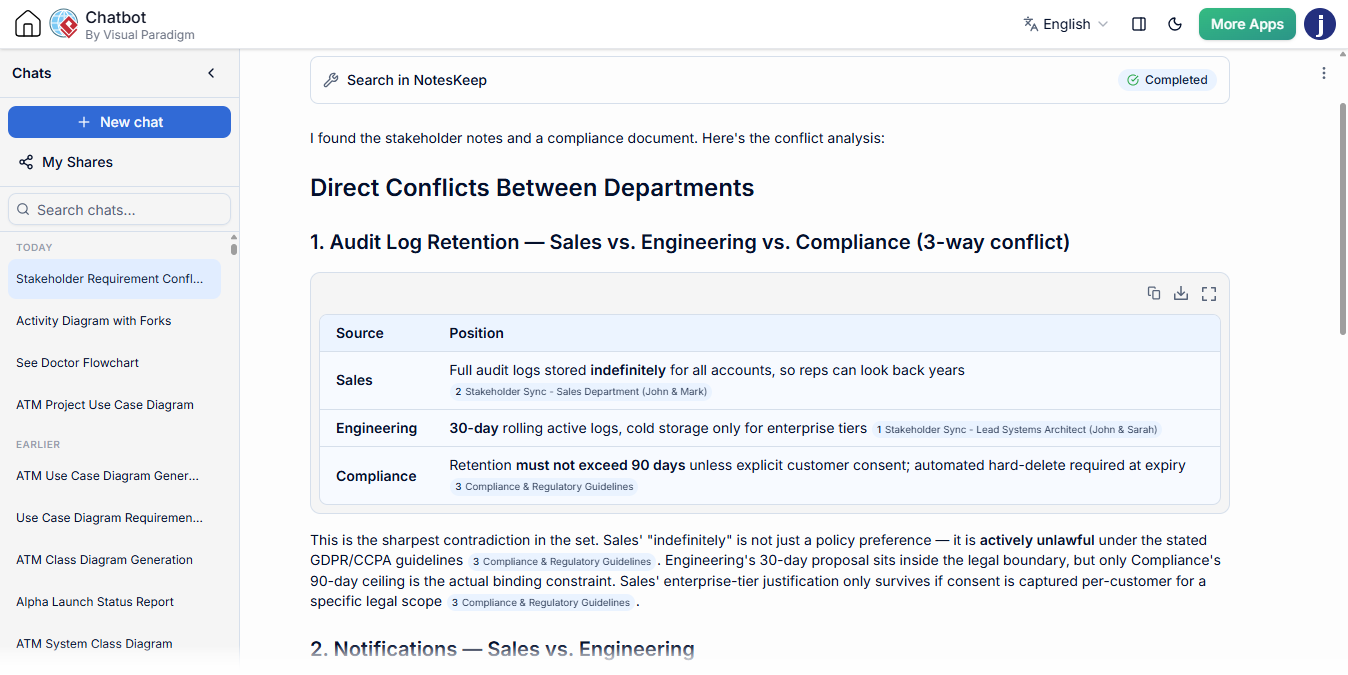
Leveraging Retrieval-Augmented Generation (RAG) and multi-document semantic reasoning, the AI Chatbot surfaced four key conflict areas with in-line clickable citations pointing back to the exact originating notes:
- Audit Log Retention (3-Way Contradiction): Sales requested indefinite audit logs, Engineering proposed 30-day active logs, while Compliance mandated a strict 90-day retention ceiling under GDPR/CCPA.
- Notification Mechanics: Sales demanded real-time pop-up notifications for every user event, while Engineering specified batched hourly digests to protect server infrastructure.
- Onboarding & Authentication: Sales requested 1-click friction-free guest access, while Engineering and Compliance mandated 2-Factor Authentication (2FA) and session validation.
- Data Export Controls: Sales asked for unrestricted bulk export for tier-1 accounts, whereas Engineering and Compliance required enforced rate-limiting and mandatory re-authentication.
2. Uncovering Missing Information and Scope Gaps
To evaluate whether the project documentation was ready for a formal System Requirement Specification (SRS), John prompted the AI Chatbot to cross-reference the notes against the enterprise PRD template:
“Based on these meeting notes and our standard PRD checklist, evaluate if we have all necessary details for a complete System Requirement Specification. What essential technical information is still missing or unaddressed?”
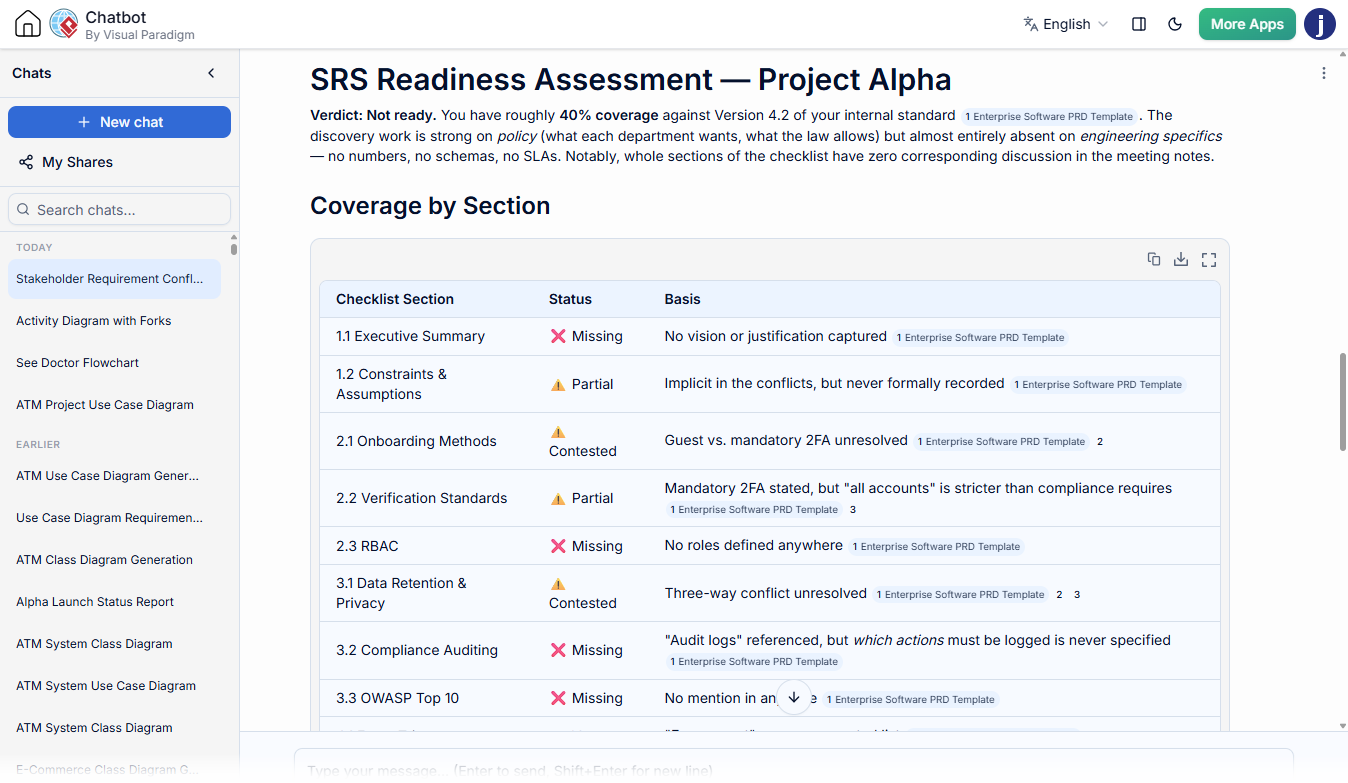
Rather than a simple missing-items list, the AI Chatbot generated a comprehensive SRS Readiness Assessment, assigning a 40% coverage score and surfacing critical cascading blockers:
- Unaddressed Engineering Specs (Section 5): The AI flagged that the entire performance section (latency SLAs, uptime, peak concurrency) was blank. Crucially, it proved that Engineering’s push-notification pushback could not be adjudicated without these concurrency baselines.
- Compliance-Coupled Infrastructure Gaps (Section 7): Discovered that backup and disaster recovery strategies were completely missing, creating an unaddressed legal exposure when interacting with 90-day GDPR hard-deletion mandates.
- Undefined Load-Bearing Terms: Flagged ambiguous placeholders like “rate limiting,” “batched hourly,” and “tier-1 customers” that actively block technical sign-off.
Phase 3: The “Derive & Keep” Knowledge Loop
Instead of manually compiling these findings into a new report, John requested the AI Chatbot to format the output into an actionable alignment agenda for the next project sync.
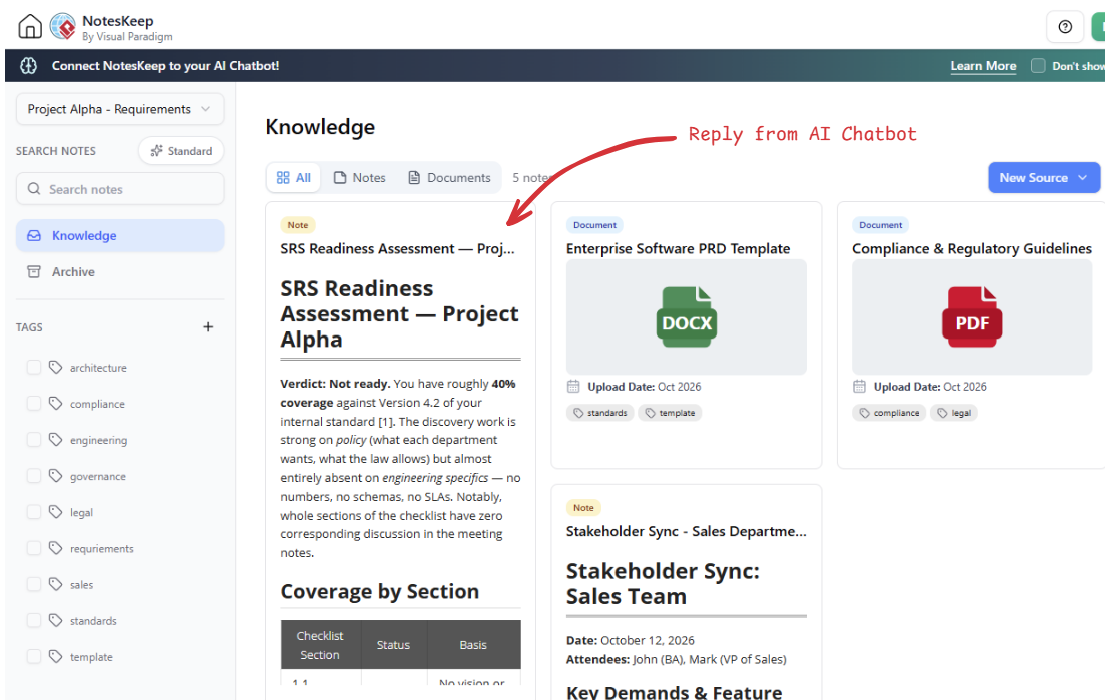
With a single click using the “Send to NotesKeep” feature, the complete analysis—including detected conflicts, source citations, and missing requirement questions—was committed directly back into the NotesKeep workspace as an active, editable note titled SRS Readiness Assessment — Project Alpha: Not Ready with 40% Coverage.
Key Results & Takeaways
- Speed & Accuracy: Reduced requirement auditing time from hours of manual document review to minutes.
- Proactive Risk Mitigation: Caught contradictory security and data retention requirements prior to architecture design and code execution.
- Complete Scope Coverage: Identified critical performance and disaster recovery omissions early in the product lifecycle.
- Continuous Knowledge Lifecycle: Seamlessly moved from raw notes to AI synthesis, back into a centralized enterprise repository.